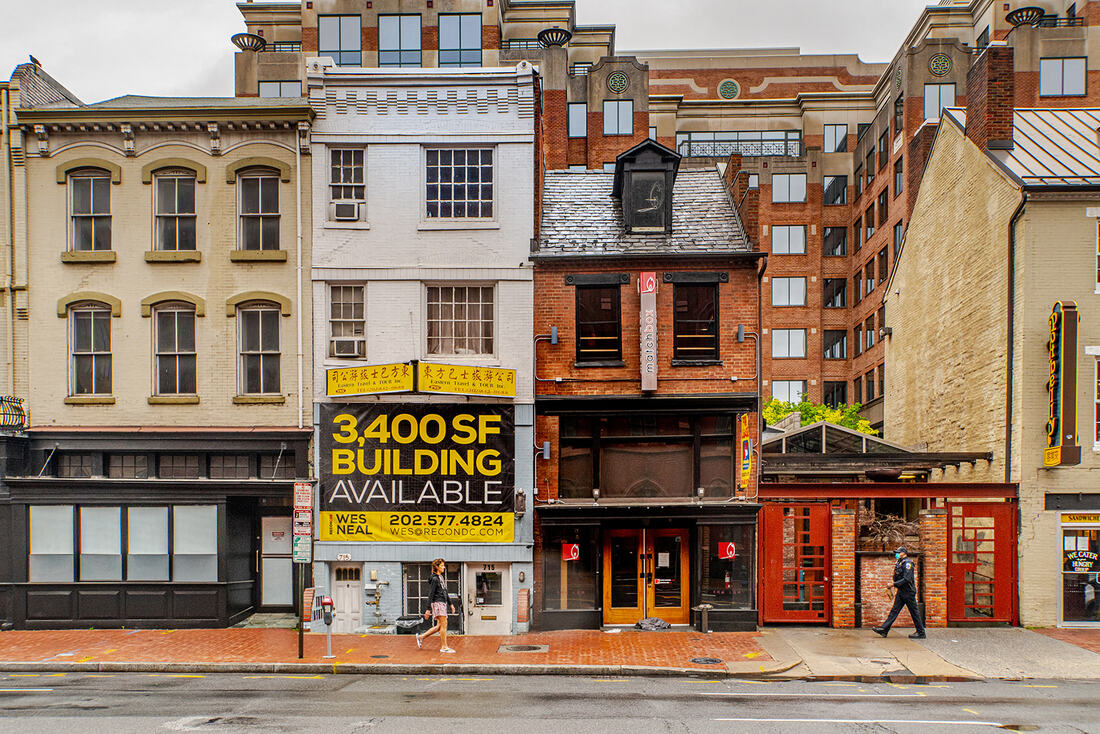
Check out Tanya's TEDx talkIn "How to Kill a Neighborhood and Make a Profit," Professor Tanya Golash-Boza shares her experiences and takes a close look at racist housing policies in the mid-twentieth century to see how they can help us understand gentrification patterns today.
|
|
Tanya Golash-Boza is available to speak about her ongoing research on incarceration and gentrification in Washington, DC
Before Gentrification: The Creation of DC's Racial Wealth Gap
Washington, DC is often described as a city transformed by gentrification. But gentrification did not begin when wealthier White residents moved into historically Black neighborhoods. It was made possible by what came before: a century of racialized dispossession, public disinvestment, criminalization, and carceral investment.
In this talk, Tanya Maria Golash-Boza draws from her award-winning book, Before Gentrification: The Creation of DC’s Racial Wealth Gap, to explain how Washington, DC became both the nation’s “murder capital” and incarceration capital before becoming a haven for wealthy White residents. She traces the direct line between redlining, urban renewal, school and housing disinvestment, the War on Drugs, mass incarceration, public housing demolition, and the displacement of Black communities.
Through historical analysis and the stories of Black Washingtonians who lost homes, livelihoods, and community anchors, Professor Golash-Boza shows that gentrification was not a natural market process. It was produced by policy choices. The state abandoned Black communities when investment was needed, punished them when harm followed, and then reinvested once land became valuable to wealthier and whiter residents.
This talk makes clear that the racial wealth gap in Washington, DC was not accidental. It was created through interlocking systems of anti-Blackness and racial capitalism. It also asks what this history requires of us now: if prisons, policing, displacement, and disinvestment helped produce today’s unequal city, then repair must begin with housing justice, community investment, violence prevention, and policies that allow Black residents not only to remain in the city, but to thrive.
This talk is ideal for audiences interested in urban inequality, race and racism, housing, gentrification, policing, mass incarceration, public policy, sociology, African American studies, and the future of American cities.
In this talk, Tanya Maria Golash-Boza draws from her award-winning book, Before Gentrification: The Creation of DC’s Racial Wealth Gap, to explain how Washington, DC became both the nation’s “murder capital” and incarceration capital before becoming a haven for wealthy White residents. She traces the direct line between redlining, urban renewal, school and housing disinvestment, the War on Drugs, mass incarceration, public housing demolition, and the displacement of Black communities.
Through historical analysis and the stories of Black Washingtonians who lost homes, livelihoods, and community anchors, Professor Golash-Boza shows that gentrification was not a natural market process. It was produced by policy choices. The state abandoned Black communities when investment was needed, punished them when harm followed, and then reinvested once land became valuable to wealthier and whiter residents.
This talk makes clear that the racial wealth gap in Washington, DC was not accidental. It was created through interlocking systems of anti-Blackness and racial capitalism. It also asks what this history requires of us now: if prisons, policing, displacement, and disinvestment helped produce today’s unequal city, then repair must begin with housing justice, community investment, violence prevention, and policies that allow Black residents not only to remain in the city, but to thrive.
This talk is ideal for audiences interested in urban inequality, race and racism, housing, gentrification, policing, mass incarceration, public policy, sociology, African American studies, and the future of American cities.
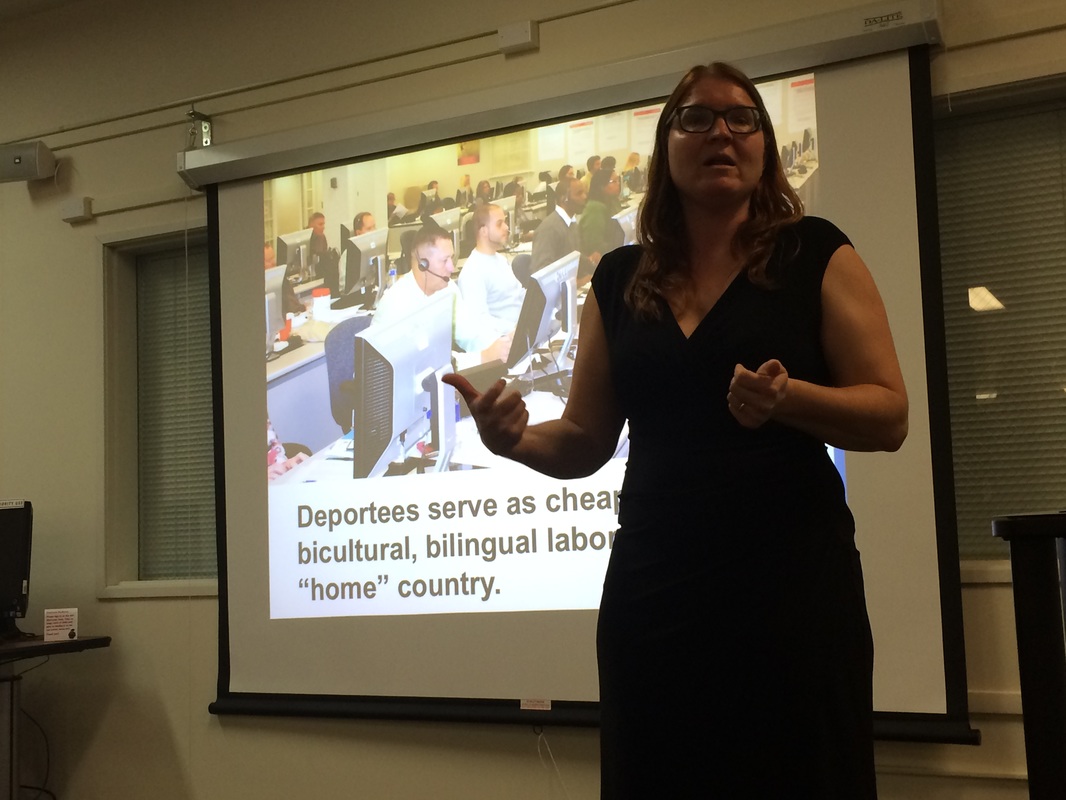
The Deportation Machine: Immigration Control, Racial Capitalism, and Resistance in the United States
Tanya Golash-Boza is also available to speak about mass deportation.
In this talk, I examine why the United States continues to invest billions of dollars in deportation even though the U.S. economy depends heavily on immigrant labor. I argue that mass deportation is not a failed system. It is a system that works by producing vulnerability.
The talk begins with a central contradiction: the United States removes workers from the very sectors that depend on them, including agriculture, construction, restaurants, hotels, meatpacking, and domestic work. Deporting all undocumented immigrants would be economically devastating and practically impossible. This raises a different question: if the deportation system cannot achieve its stated goal, what is it actually doing?
I answer that question through the lens of racial and gendered capitalism. Immigration enforcement does not simply exclude people from the nation. It helps organize the labor market by producing deportability: the constant possibility of detention, removal, and family separation. That threat disciplines workers, limits their ability to challenge wage theft or unsafe conditions, and sustains a workforce that is essential but politically marginalized.
The talk also examines who is targeted by the deportation system. Deportation is highly selective: it disproportionately affects Latin American and Caribbean men. These patterns are not accidental. They are produced and justified through racialized and gendered narratives that portray some migrants as criminals, threats, or outsiders.
I describe the “deportation machine” as a self-reinforcing system sustained by political incentives, media narratives, corporate profits, and employer demand for vulnerable labor. Politicians gain votes by scapegoating immigrants. Media outlets gain audiences by amplifying fear. Corporations profit from detention, surveillance, transportation, and border contracts. Employers benefit from the labor discipline created by deportability. Together, these forces keep the system running even when it fails to address the causes of migration.
The talk ends by examining recent spectacles of immigration enforcement. While overall deportation numbers are not higher than their historic peak, enforcement has become more visible, concentrated, and theatrical. These spectacles generate fear, circulate through media and social media, and make the system appear more powerful than it is.
The central claim is that the deportation system is not broken. It is doing what it was built to do: organize labor, produce racialized vulnerability, generate profit, and sustain political power. Confronting it requires more than policy reform. It requires knowledge, solidarity, organizing, and collective action.
In this talk, I examine why the United States continues to invest billions of dollars in deportation even though the U.S. economy depends heavily on immigrant labor. I argue that mass deportation is not a failed system. It is a system that works by producing vulnerability.
The talk begins with a central contradiction: the United States removes workers from the very sectors that depend on them, including agriculture, construction, restaurants, hotels, meatpacking, and domestic work. Deporting all undocumented immigrants would be economically devastating and practically impossible. This raises a different question: if the deportation system cannot achieve its stated goal, what is it actually doing?
I answer that question through the lens of racial and gendered capitalism. Immigration enforcement does not simply exclude people from the nation. It helps organize the labor market by producing deportability: the constant possibility of detention, removal, and family separation. That threat disciplines workers, limits their ability to challenge wage theft or unsafe conditions, and sustains a workforce that is essential but politically marginalized.
The talk also examines who is targeted by the deportation system. Deportation is highly selective: it disproportionately affects Latin American and Caribbean men. These patterns are not accidental. They are produced and justified through racialized and gendered narratives that portray some migrants as criminals, threats, or outsiders.
I describe the “deportation machine” as a self-reinforcing system sustained by political incentives, media narratives, corporate profits, and employer demand for vulnerable labor. Politicians gain votes by scapegoating immigrants. Media outlets gain audiences by amplifying fear. Corporations profit from detention, surveillance, transportation, and border contracts. Employers benefit from the labor discipline created by deportability. Together, these forces keep the system running even when it fails to address the causes of migration.
The talk ends by examining recent spectacles of immigration enforcement. While overall deportation numbers are not higher than their historic peak, enforcement has become more visible, concentrated, and theatrical. These spectacles generate fear, circulate through media and social media, and make the system appear more powerful than it is.
The central claim is that the deportation system is not broken. It is doing what it was built to do: organize labor, produce racialized vulnerability, generate profit, and sustain political power. Confronting it requires more than policy reform. It requires knowledge, solidarity, organizing, and collective action.
Click to set custom HTML
Featured Talks
Watch selected public talks by Tanya Golash-Boza on racial capitalism, immigration enforcement, deportation, gentrification, inequality, and social change.
How to Kill a Neighborhood and Make a Profit
TEDx talk on racist housing policy, gentrification, and profit.
Are Deportation Laws Racist?
A public lecture on deportation, immigration law, and racialized exclusion.
Race and Dis/Investment in the Nation’s Capital
A talk on racial inequality, urban policy, and displacement in Washington, DC.
Faculty Author Series: Dr. Tanya Golash-Boza
A conversation on research, writing, inequality, and public scholarship.
Social Justice Conference Talk
A public lecture on race, immigration, inequality, and justice.
Talking Data Equity
A conversation on equity, research, data, and structural racism.